


Automation and robotisation an opportunity for stable growth in uncertain times
What are PROSTER's main areas of operation? Which industries do you work with?
We will analyze your production, calculate ROI and integrate all machines - AT A LOW COST
Consultation


Our long-standing presence in the industry has allowed us to learn the problems and expectations of our customers. Therefore, we have been able to develop proven solutions, but we will always adapt them to the specifics of your production. We understand that you may face challenges such as:
Without knowing the robotics and automation industry from the design and implementation side, it is difficult to even estimate the budget. And its optimisation in this case is impossible.
You are wondering if your production is prepared at all for robotics or automation. You would like to get an expert opinion and expert advice on this issue.
Automation does not tolerate lack of repetition and quality deficiencies. But which parameters are most important and how should they be improved?
Some employees fear losing their jobs as a result of being replaced by robots. Others doubt whether they can handle modern, computerised equipment.
Are you confident that your production is prepared for robotics or automation? Or do you lack trained employees or details of expected changes?
The use of automation requires preparation, the implementation of which may stretch out for reasons beyond your control. And yet every delay affects subsequent processes.
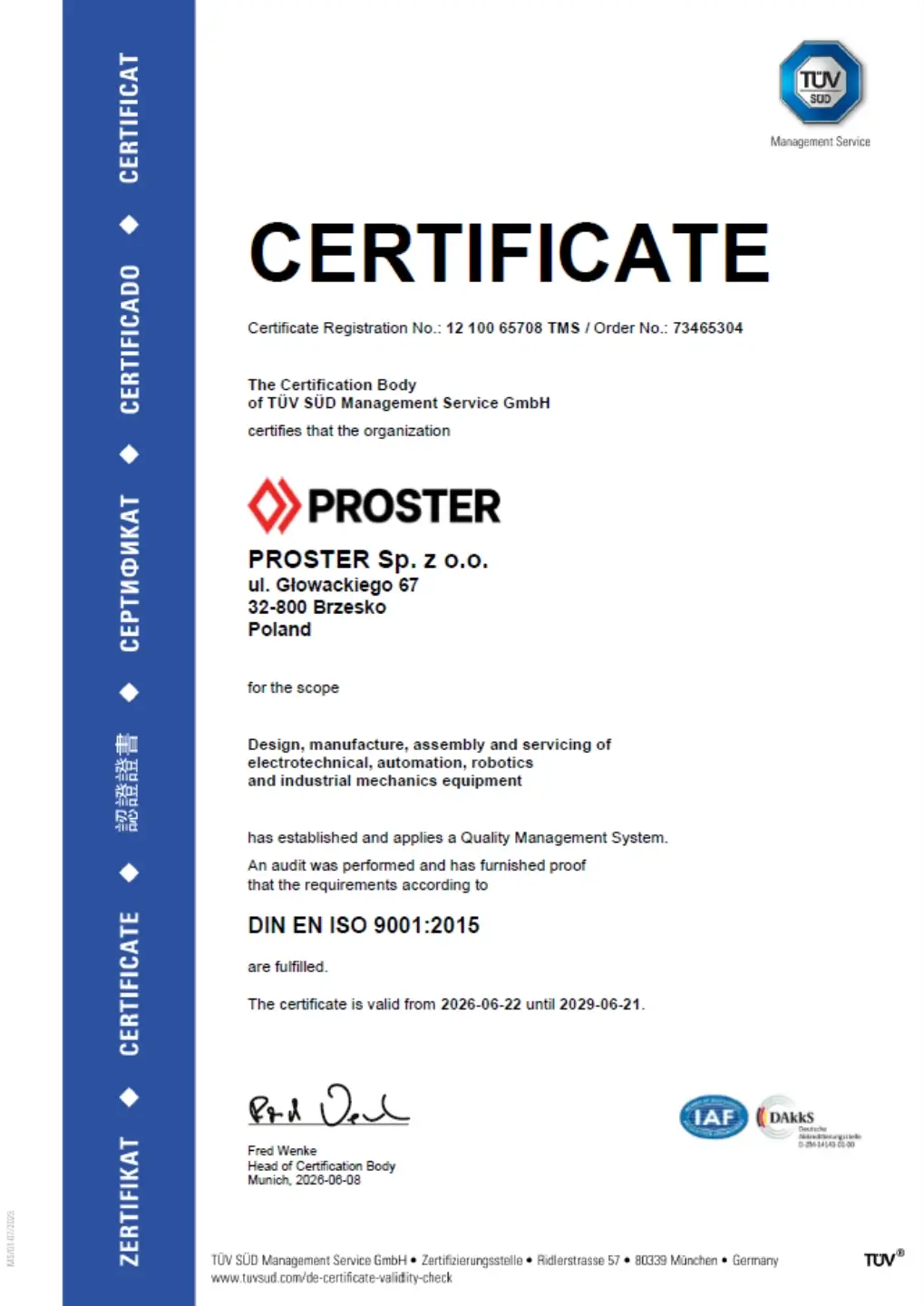
This certificate is valid until 21.06.2029.
Certificate registration number: 12 100 65708 TMS.
We recognise your needs to offer a solution tailored to your expectations. This allows us to optimise costs and help you prepare your budget.
We provide feedback on imperfections in your preparation or processes, which we will remove together to make robotisation or automation possible.
We will point out to you exactly which production parameters should be improved and how.
We fit in with your deadlines. We are flexible, so we can adjust the project’s delivery and launch dates to fit your time frame.
We’ll give you tips on how to increase employee awareness, broaden the staff’s skills or provide a different workplace.
We are not limited by industries, as we have proven packaging and palletising solutions in many sectors. But the most common use of robotics and production automation is in the industry of:
01
Food
02
Plastics processing
03
Foundry
04
Construction
05
Other? Inquire via the form!
Send an inquiry or call +48 693 653 035. We will talk for a few minutes about the challenges you face.
1
2
3
4
5


Long-term cooperation with our Customres often begins with professional advice from our experts.
50+
consulting audits carried out
100+
concepts made for customers
Developing a solution tailored to the customer's needs is a challenge we must meet in 100%.
5+
developed machine designs
10+
implemented projects of robotic lines and stations
Proster's large team of skilled professionals will seamlessly execute even a particularly complex project.
60+
employees can be involved in the project
25+
million PLN is the total cost of the projects we have implemented
It all depends on the number of robots used for the solution, the processes we want to robotise, the performance of the target workstation and the production parameters. Smaller stations can cost as little as a few hundred thousand PLN, and larger ones can cost up to a dozen/ten million PLN. If you would like an approximate budget cost, please contact us.
On each project we are able, in consultation with the customer, to simulate the degrees of efficiency improvement after the project is completed. From our experience, we are aware that the introduction of just 2 new robots can generate productivity increases of up to 300%.
The use of a robot does not completely eliminate human labour, while it significantly reduces their participation in production, allowing to reduce also accidents at work or downtime due to, for example, sick leave. This means that people previously working in production can be delegated to other tasks.
Before starting the project, we can perform an audit for you of the place where you want to make changes and help you prepare it for production process.
We have completed more than 5,200 projects for customers around the world for more than a dozen industries, which can attest to our professional approach also in terms of timeliness. In addition, we have every performance date written into the contract.
Despite the popularity of robots, they are complex devices that come at a price. In addition to it, the cost of designing and manufacturing a suitable gripper, as well as the time needed to assemble and commission the station should also be included in the calculation.
It all depends on the number of robots used for the solution, the processes we want to robotise, the performance of the target workstation and the production parameters. Smaller stations can cost as little as a few hundred thousand PLN, and larger ones can cost up to a dozen/ten million PLN. If you would like an approximate budget cost, please contact us.
The use of a robot does not completely eliminate human labour, while it significantly reduces their participation in production, allowing to reduce also accidents at work or downtime due to, for example, sick leave. This means that people previously working in production can be delegated to other tasks.
We have completed more than 5,200 projects for customers around the world for more than a dozen industries, which can attest to our professional approach also in terms of timeliness. In addition, we have every performance date written into the contract.
On each project we are able, in consultation with the customer, to simulate the degrees of efficiency improvement after the project is completed. From our experience, we are aware that the introduction of just 2 new robots can generate productivity increases of up to 300%.
Before starting the project, we can perform an audit for you of the place where you want to make changes and help you prepare it for production process.
Despite the popularity of robots, they are complex devices that come at a price. In addition to it, the cost of designing and manufacturing a suitable gripper, as well as the time needed to assemble and commission the station should also be included in the calculation.
Inżynier Sprzedaży
Even if they are not yet fully specified.
Production automation is the process of utilizing advanced technologies to optimize manufacturing processes. For production companies, it signifies a revolution in the way they operate. Investing in automation is a step into the future for manufacturing firms. It not only increases competitiveness but also opens up new opportunities for growth and innovation.
Production companies can gain a lot by investing in production automation. It offers a range of benefits that improve the company’s results on many levels.
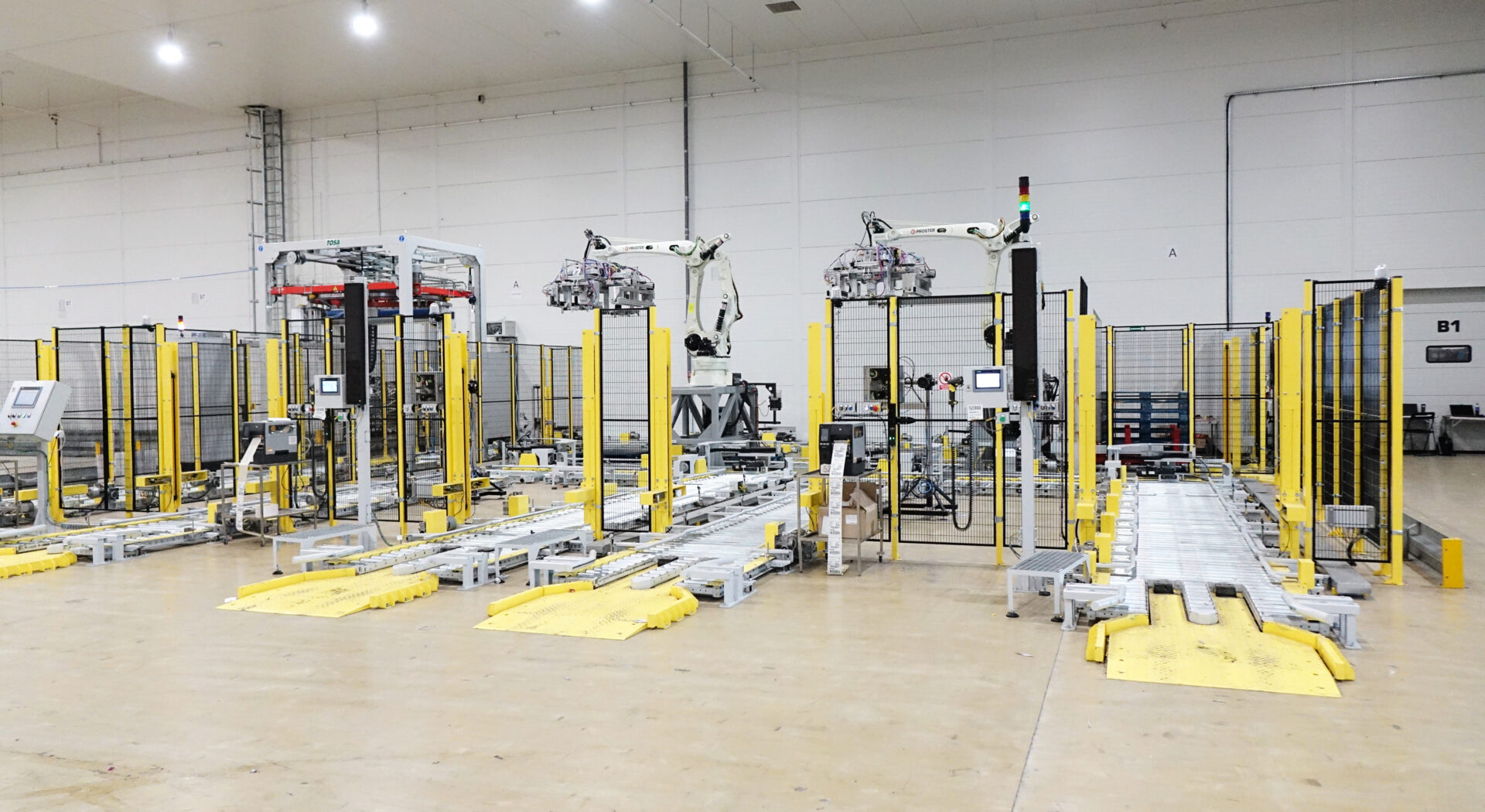
Production automation is not just about machines and equipment, but also software used for monitoring, analyzing, and managing company processes. Examples of automation machines and systems include technological machines for various industries and products (e.g., filling machines, bottle blowing machines), automatic packaging machines, wrapping machines, industrial robots, cobots, Cartesian robots, product, packaging, and pallet conveyors, palletizers, pallet wrappers, AMR mobile robots, AGV, automatic storage racks, SCADA, ERP, MES, CMMS systems, etc.
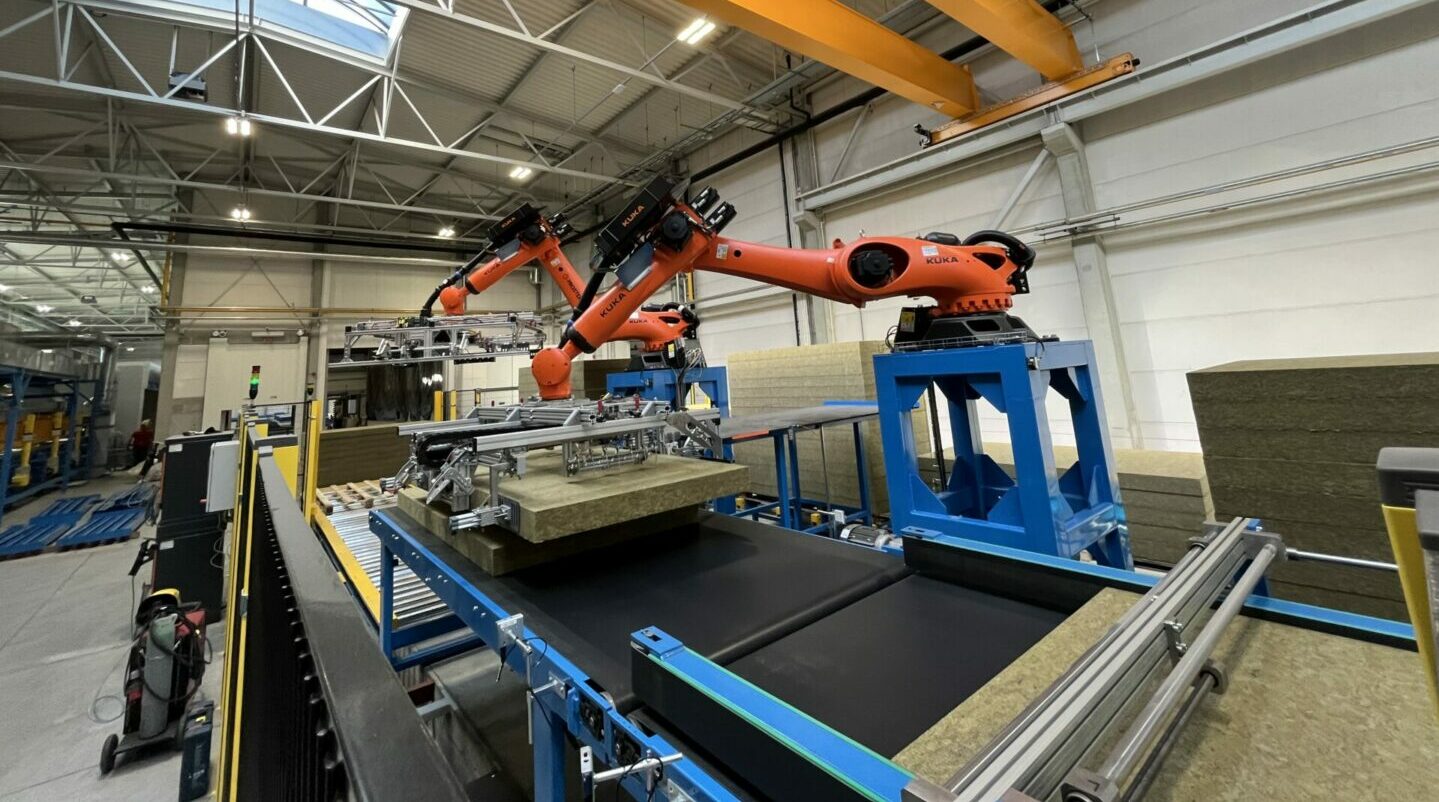
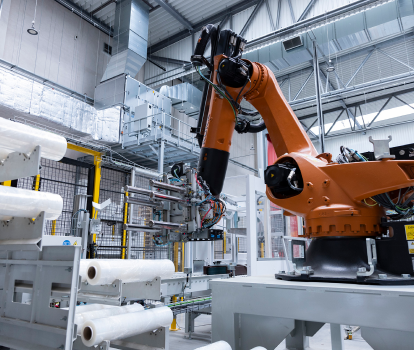
Production robotization is a crucial element of modern automation. Industrial robots (including cobots) offer an unmatched combination of precision, efficiency, and flexibility. Precision, because their accuracy reaches hundredths of a millimeter. Efficiency, because they can perform tasks really fast. Also flexibility, due to their ability to adapt to various production tasks or multiple products.
Assembly, welding, handling, CNC machine operation, packaging and palletizing, or quality control are some of the tasks they can perform. An important benefit of their application is the handling of dangerous or burdensome activities for humans.
The implementation of robotization is a strategic investment in the future of a production company. It is not only an increase in efficiency but also a step towards Industry 4.0, where intelligent, connected systems define new production standards.
A good start to implementing automation will be an analysis of the current situation in production. Understanding the processes that function efficiently enough, but most importantly those that require improvement, is essential from the start. It allows identifying areas for improvement or eliminating unnecessary steps even before automation. It is also important to learn about the technological solutions that are available on the market. This will let us know which processes are even possible to automate, what are the indicators of successful implementation, and most importantly, reduce the risk of unprofitable investment.