Proster Articles – Sources of Professional Knowledge
Industry knowledge gathered by specialists for specialists. Benefit from the experience of our experts.
Production line assembly – How to ensure machine reliability in manufacturing?

Technical knowledge of specific technological equipment and hands-on experience in its assembly are the most critical factors for reliable production line operation.
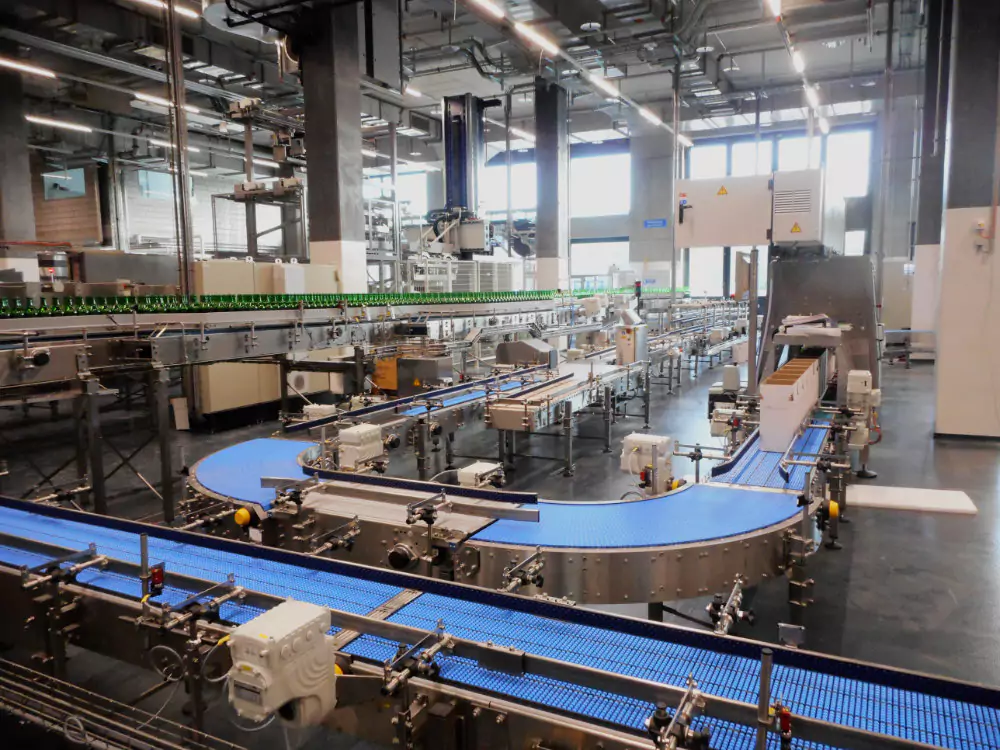
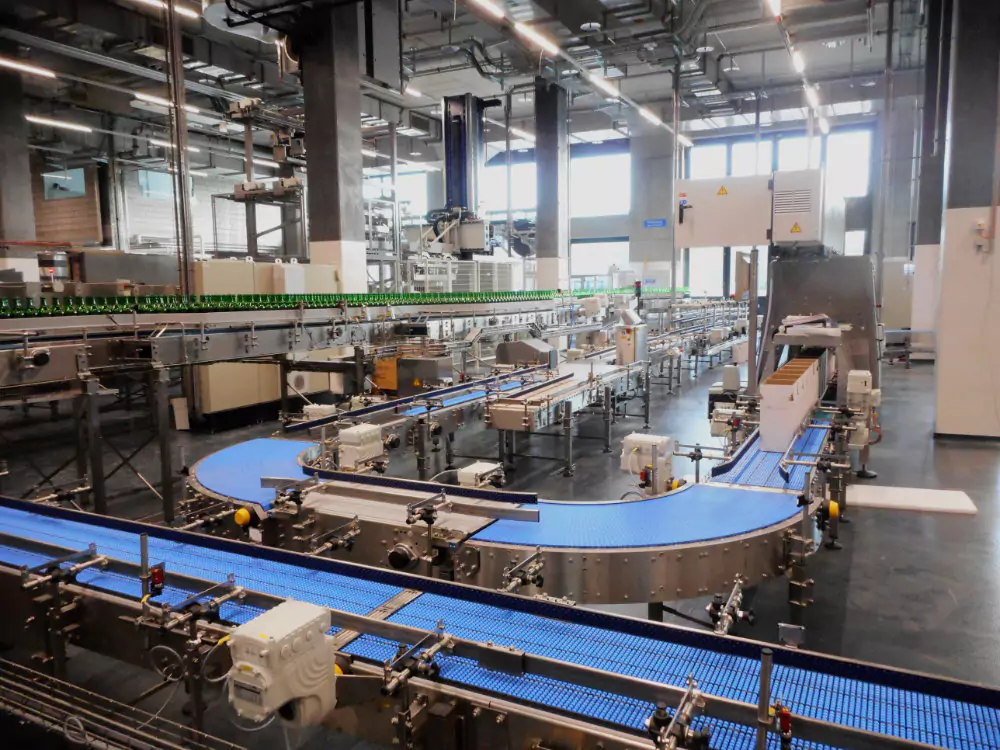
A production line is a group of machines and devices arranged according to the successive stages of a product manufacturing process. The way products are manufactured varies depending on the product’s characteristics and the industry in which the company operates.
To carry out production line assembly, the following are essential:
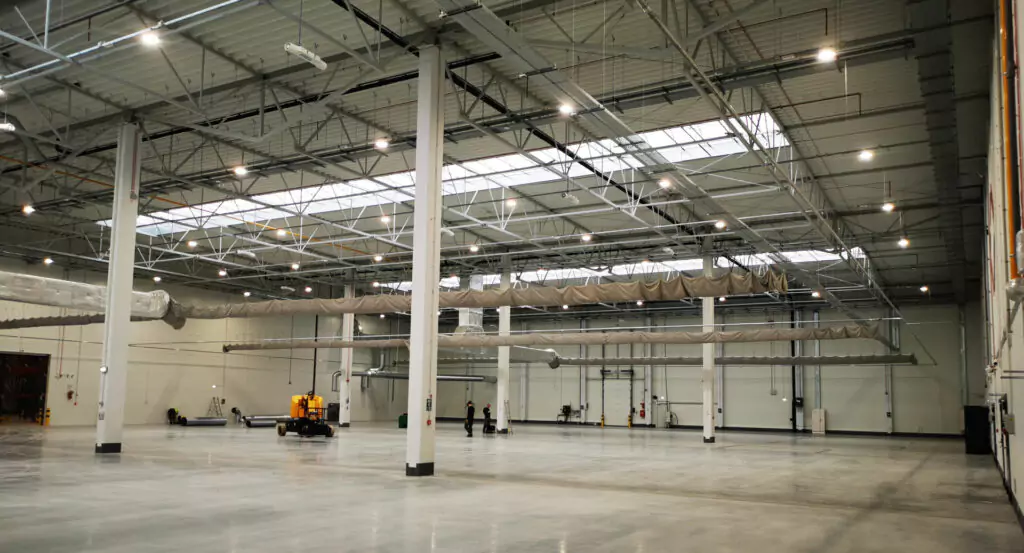
- An assembly site audit (to verify the floor condition, hall height, and availability of utilities)
- Technical documentation for machines and equipment, their layout on the production floor, and the connections between components
This documentation includes, among other things, the production hall layout and the positioning of machines across the entire technological line, the precise placement of machines and equipment, detail drawings of placements and connections, exact quantities of devices and components, and the methods for taking measurements and carrying out assembly in specific cases.
- A trained engineering workforce, meaning teams of mechanical fitters and electricians
The engineering staff should have a technical education, as well as skills in installing specific machines (for a given industry and application), assembling machine assemblies (including conveyors), laying cable trays and wiring (including network cables), working-at-height certification, SEP electrical qualifications, and welding qualifications are also an advantage.
Safety during assembly is of the utmost importance. It is therefore essential to become familiar with national health and safety regulations, safety instructions provided by the client, and the detailed machine documentation. Without this, we are exposed to workplace accidents as well as financial penalties.
The accuracy of the technical documentation and the competence of the engineering staff – these are the two key factors that directly affect smooth and, above all, reliable production line assembly.
How Does Technological Line Assembly Proceed?

Production facilities are constantly under pressure to meet customer order deadlines, which is why any delays in line assembly are costly and the process must be carefully planned.
Preparing the Technical Specification and Production Line Layout
First and foremost, it is necessary to ensure a sufficiently detailed technical specification for the machines and equipment, as well as the line layout — without which assembly cannot take place. The documentation also includes drawings of the connections between individual mechanical components, along with their quantities and dimensions. The electrical documentation must include the routing of cable trays, machine connections and the connections between them, and a complete list of all required components. Prior to assembly, the equipment layout must be compared against actual on-site conditions.
Transporting Machines to Their Destination
The dimensions and weight of the machines must be known in order to plan the equipment needed for unloading. Completeness is verified and any damage sustained during transport is identified. Machines are often secured to wooden frames for safe transit, so the documentation should specify the safe method for separating components from the pallet. The sequence in which machines are moved to their destination must be determined, taking their positions along the entire line into account. Mobile cranes, heavy-transport rollers, overhead cranes, and lifting slings or chains should be used to move large components and complete units. Forklifts and transport rollers are most commonly used for moving other assemblies.
💡 It is important to wait for the machine to acclimatize to the temperature of the assembly environment. There is a risk of inaccurate alignment, which leads to susceptibility to breakdowns and excessive wear of a poorly positioned machine.
The placement of a machine should be precisely measured, and the contact points of the supports with the floor should be marked before the machine is moved. The floor should be inspected at the contact points of conveyors and machines. These should not be located on unstable surfaces, such as the joint between two floor slabs, a drain, or cracks.
Mechanical Assembly
Tools for assembly and measurement need to be prepared, such as a laser distance meter, angle gauge, laser level, surveying level, jack, forklift, and more. Hydraulic jacks are used to adjust the height of machine supports. Once positioned, machines must be leveled using, for example, spirit levels and/or surveying levels. The joining of machine modules and their adjustment takes place simultaneously — module by module.
Electrical Installation
The scope of electrical installation for a production line may vary depending on the project, but it most commonly includes several stages:
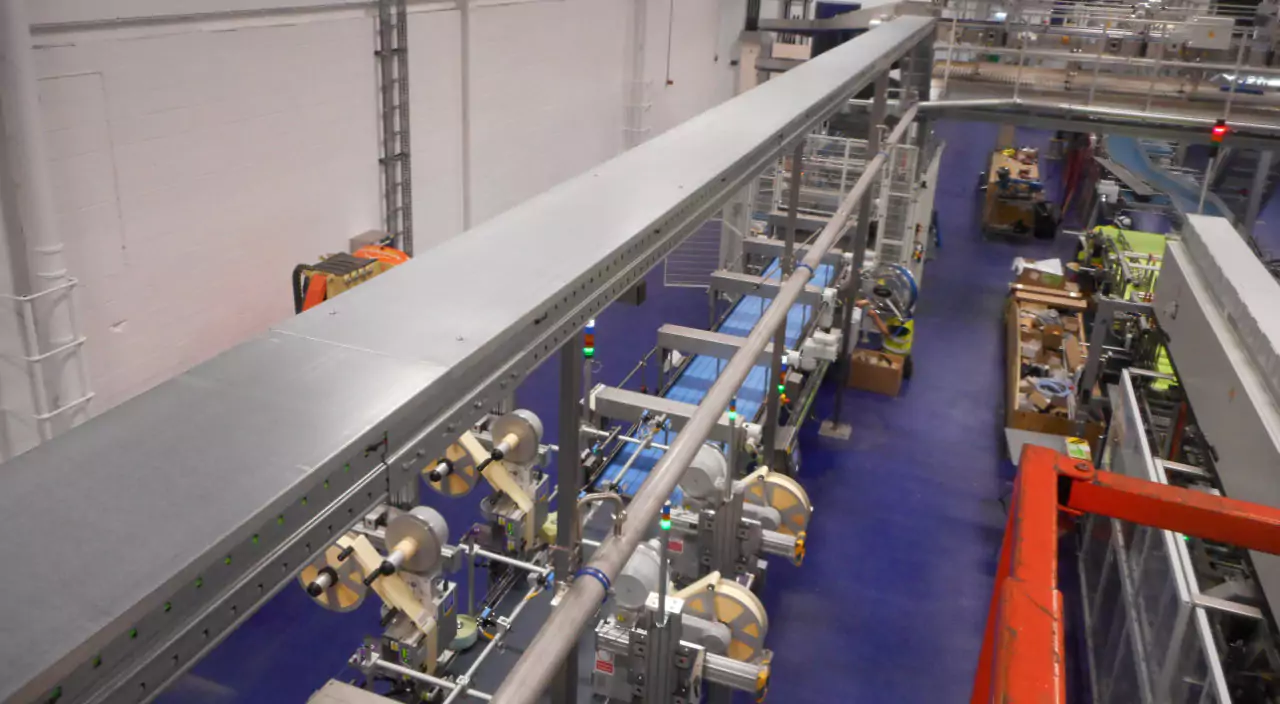
- Laying and securing cable trays and cables (electrical cables and control wiring should be routed separately due to electromagnetic compatibility requirements)
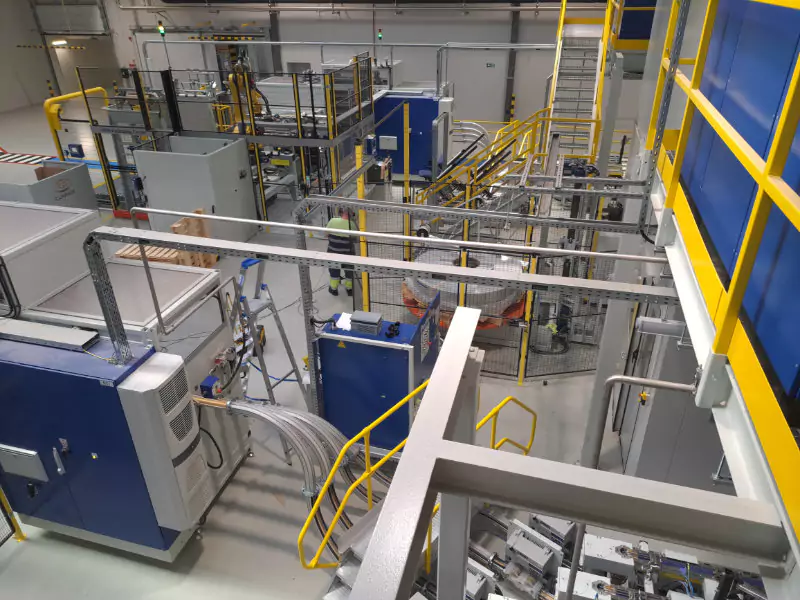
- Installing and connecting the main control cabinets and local cabinets for individual machines (in most cases, pre-fabricated cabinets)
- Installing sensors, switches, emergency stop switches, safety light curtains, and operator panels
- Connecting the power supply and grounding to the machines
Finally, it is essential to ensure proper signal exchange between the machines so that the entire system operates smoothly and efficiently.
What Mistakes to Watch Out for During Assembly?
Production lines are major investments, so from the perspective of a manufacturing company, the most important things are choosing the right assembly contractor and properly coordinating the work. The best way to assess a contractor’s competence is to ask their existing clients. References and the history of completed projects should be verified, and attention should be paid to the competence and qualifications of the employees. Equally important is drawing up a contract with a clearly defined scope, timelines, costs, warranty terms, and responsibility for any potential issues.
Returning to the assembly itself, let us also look at mistakes that can be made before and during the process, as awareness of these will better prepare you for working with a contractor.
- An unclear or incomplete technical requirements specification can lead to errors in cost estimation and subsequently in the assembly itself. A reliable assembly company will, however, be aware of this and will draw it to the client’s attention.
The challenge of incomplete technical documentation can nonetheless be overcome with the right experience.
Other mistakes that can be made during assembly include:
- Non-compliance with regulations and standards can lead to inadequate machine safeguarding and, as a result, financial penalties, production shutdowns, or injury to workers
- Lack of appropriate engineering qualifications primarily creates safety risks, leads to improper assembly, and — worse still — criminal sanctions
- Underestimating costs can ultimately lead to financial difficulties during assembly or even the abandonment of the project due to insufficient funds
- Choosing the wrong materials leads to long-term reliability problems
- Inadequate supervision of work progress and limited communication with the contractor results in a loss of control over the project and potential delays
- Lack of a risk management plan causes chaos when problems arise, and underestimating the significance of issues can extend the project timeline
Having specific processes in place for unforeseen project situations prevents decisions being made in the heat of the moment. This makes it significantly easier to overcome such challenges, and also allows employees to act without excessive stress — meaning they make more rational decisions.
In our articles, we aim to help you make well-informed choices when selecting professional services. If you found this valuable, feel free to explore our services and completed projects.